

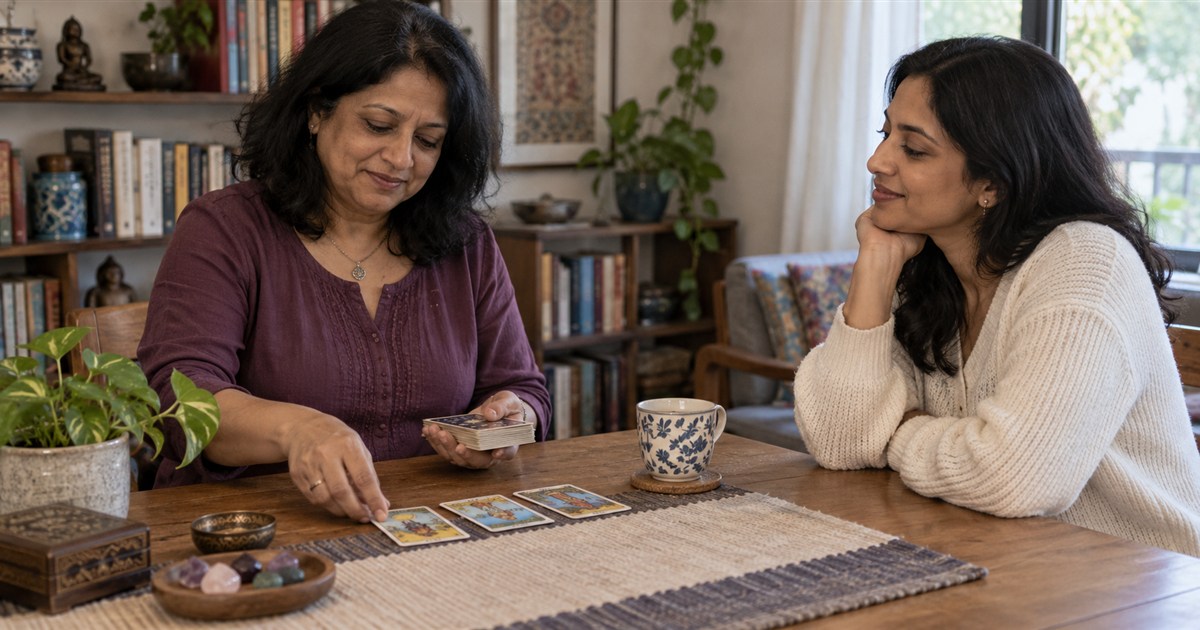
A welcoming space does not require you to feel positive all the time. Start with a concrete problem—distracting noise, an awkward work surface, unclear message hours or belongings that block the task you want to do.
“Positive energy” can describe how a place feels to you. It is not a diagnosis of the room, a measure of someone’s character or a promise that decor will improve health, relationships or earnings.
Name the problem before changing the space
Write one sentence that describes what is happening: “I cannot find the items I need before a session,” or “Other people can hear a private conversation.” A specific problem gives you something to review after making a change.
| What you notice | A practical first step | What not to assume |
|---|---|---|
| Too many items on the table | Keep the items required for the next task within reach; store the rest accessibly. | Clutter proves spiritual failure. |
| Distracting sound | Agree quiet hours or a better appointment window. | Everyone must like the same music. |
| An uncomfortable shared room | Ask what people need before changing scents or decor. | Your preference is right for everyone. |
| Private conversations are overheard | Review the location and what can remain confidential. | A decoration solves privacy problems. |
| Messages continue all evening | Set communication hours and a next-reply process. | You must always be available. |
Choose changes you can undo
Try moving one item, reducing one distraction or setting a defined work window. Use what you already own before buying a “cleansing” kit or redecorating. A trial should be affordable and easy to reverse.
Color, plants and symbolic objects are personal choices, not treatments or guarantees. If a spiritual practice matters to you, describe it as your practice rather than claiming it removes other people’s emotions. Read the practical workspace review for a task-focused approach.
Respect shared-space preferences
Ask before introducing incense, strong fragrances, music or ritual activity into a shared room. Someone declining a scent or ceremony is not rejecting you or proving they have negative energy. A no-scent, no-flame option may be the simplest shared agreement.
If you offer readings from home, consider who else uses the room and whether clients can hear household conversations. You do not need an impressive professional office; you do need an honest description of your service and its limits.
Do not turn positivity into pressure
A person can be upset, tired or doubtful without being an obstacle to your success. Listen to a specific concern before labelling the person “negative.” Likewise, you can dislike a work arrangement without being ungrateful.
If there is intimidation, unwanted conduct or a safety concern, address the conduct rather than trying to change the room’s energy. The workplace bullying guide offers a separate route for reviewing that problem.
Make one clear agreement
For example: “I will use this table for booked sessions on Tuesday evenings, put the equipment away afterward and check messages the next morning.” That is clearer than asking everyone to keep the house positive indefinitely.
Use a realistic weekly schedule for time conflicts and the reader-boundary checklist for session scope. After a trial, ask whether the actual problem improved. Keep, adapt or undo the change; you do not have to defend a purchase or a spiritual explanation that does not help.
Frequently asked questions
1. What does positive energy mean here?
It can describe a personal feeling about a space, not a measurable diagnosis or a guarantee of outcomes.
2. Where should I start when a room feels wrong?
Name a specific problem, such as noise, missing equipment, privacy or competing uses of the space.
3. Do I need cleansing products?
No. Try a practical, reversible change with what you already have before spending money.
4. Does clutter mean I have negative energy?
No. Review whether the items interfere with access or a task; do not treat the room as a judgement about your character.
5. Can I keep spiritual decor?
Yes, if you want it. Treat it as a personal symbol or preference rather than a promised treatment or outcome.
6. Should I burn incense in a shared room?
Ask the people sharing the space first. A no-scent, no-flame agreement may be more suitable.
7. What if someone dislikes my music or fragrance?
Their preference is not proof of negative energy. Agree on an arrangement that respects shared use.
8. Will changing colors improve my career?
No color guarantees promotion or earnings. Choose decor for preference and use, not a promised career result.
9. How can I improve a home reading space?
Check the task surface, equipment, privacy and household arrangements. A professional-looking office is not required.
10. Can decor solve a confidentiality problem?
No. Review who can hear the conversation and be honest about the privacy the setting can provide.
11. Must I stay positive when work is difficult?
No. Doubt or frustration can point to a real concern that deserves practical review.
12. Should I remove every negative person?
Do not use a broad label instead of assessing specific conduct, your boundaries and the situation.
13. How should I handle after-hours messages?
State when you check messages and when a reply can be expected, then plan around that commitment.
14. How do I know a change helped?
Compare the specific problem before and after the trial, rather than judging whether the room feels spiritually correct.
15. What if the change does not help?
Adapt or undo it. Consider whether the issue is a work arrangement, shared-space conflict or conduct problem rather than decor.
The concept of consciously cultivating positive energy in different spaces is intriguing. Different cultures indeed have varied practices for maintaining such positivity. Incorporating some of these methods could have a beneficial impact on mental and emotional well-being.
The article’s advice on maintaining a harmonious work environment is quite relevant. Balancing work and personal life can prevent burnout. Avoiding conflicts and gossip also helps in creating a more positive and productive workspace.
The emphasis on cleanliness and organization as a means to invite positive energy is well-placed. Clutter and filth can indeed contribute to a sense of chaos and negativity. The suggestion to clean and declutter spaces is not only practical but also essential for mental clarity.
The discussion on using elements like smudging and candles to clear negative energy is interesting. It highlights the importance of environment on psychological health, which is often underestimated. Further, the idea of cleansing spaces before settling in is quite practical.
The use of rituals and symbolism to protect against negative energies is fascinating and reflects ancient wisdom. It’s important, however, to combine such practices with more universally accepted methods for emotional and mental resilience.
Indeed, rituals can serve as powerful psychological tools that help individuals feel more in control of their environment. Combining them with modern psychological practices could be particularly effective.