

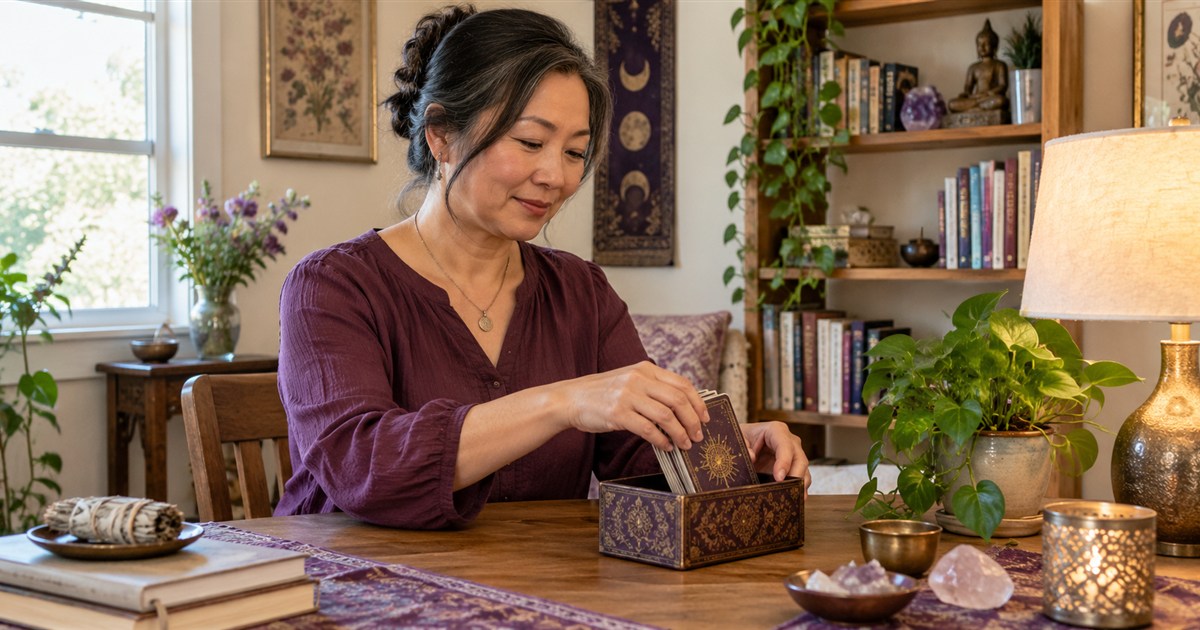
Feng shui can be meaningful to people who want their workspace to reflect a cultural tradition or personal intention. A desk position, plant or fountain does not guarantee customers, profits or protection. Begin with a room you can use safely and comfortably; treat symbolic choices as a separate layer.
Tradition is more than a decorating shortcut
Feng shui is associated with Chinese traditions of siting and arranging environments. Approaches vary; a generic list of “lucky” objects is not a complete account of the practice. Chiou and Krishnamurti’s architectural study, Unraveling feng-shui, examines traditional principles and calculations for orientation and construction dates. That cultural and architectural analysis is not evidence that a tabletop object creates wealth.
If learning the tradition matters to you, ask a teacher which approach they use and how they explain it. Keep their interpretation distinct from building safety, practical design and business performance.
Five practical checks before buying anything
| Check | Look for | Small change to try |
|---|---|---|
| Movement | Can people enter, sit and leave without squeezing past furniture? | Keep a clear route and remove unnecessary obstacles. |
| Light | Can you read or use a screen without reflected glare? | Adjust the lamp or blinds before buying decor. |
| Work surface | Is there room for the tools you actually use? | Keep the current task available and store unused items nearby. |
| Privacy | Can someone else see or hear client information? | Review screen position and the setting for calls. |
| Maintenance | Can you care for the space within your time and budget? | Choose fewer objects you can maintain rather than a complicated display. |
These are practical questions, not feng shui rules or a guarantee of productivity. For screen work, OSHA’s workstation-environment guide recommends reducing glare and arranging lighting appropriately. Check what your own tasks and room require.
Desk placement: work with the room you have
You do not need a large professional office. A dining-table corner or modest home workspace may be workable. Consider access, available power connections, light, privacy and whether the surface accommodates your work. Do not insist that every desk must face the same direction or that a wall position is always wrong.
If a traditional arrangement appeals to you, try it only where it fits those needs. Take a simple before-and-after note: what became easier, what became harder and whether you need to move something back. You are evaluating usability, not measuring invisible energy.
Plants, water and color: optional, not income strategies
Plants
A plant may be a welcome part of your room. Choose one suitable for the available light and your ability to care for it. Check safety for household pets or children before purchasing. A “money plant” does not establish future income.
Water features
A fountain or aquarium adds cost and maintenance. Consider spills, noise, nearby electronics and, for an aquarium, the animals’ ongoing care. Do not buy one because you were promised wealth.
Choose colors for readability and preference rather than declaring one color universally productive or another aggressive. On a website or printed price list, text contrast matters more than a symbolic color label.
Declutter without discarding what you need
Sort items into “needed for current work,” “needed but stored” and “not needed.” Keep necessary records and tools; do not throw away important paperwork to perform an energy-clearing ritual. A less crowded desk can be a practical preference, not a moral test.
For readers working by phone or online, keep essential divination tools accessible without making the table difficult to use. Our divination-tool comparison can help distinguish a tool’s role from promotional claims.
Example: a shared home room
A reader uses a small table that also serves family meals. Instead of buying a fountain and moving heavy furniture, they store cards in a box, set out only the current session tools, check who can overhear calls and arrange a lamp to avoid glare. They add one meaningful object they already own. At the end of the session, the tools return to storage.
Review whether the arrangement fits the real task and shared household needs. You can adapt it without buying a new set of furnishings.
Keep the business plan separate
Track costs, customer needs, service terms and actual income independently of symbolic choices. If earnings are the concern, start with our money-and-values planning guide. If working conditions need attention, use the healthy-workplace checklist before adding decorative extras.
Frequently asked questions
1. What is feng shui?
It is associated with Chinese traditions of siting and arranging environments. Approaches vary, and a simple decorating checklist is not a complete account.
2. Does feng shui guarantee business success?
No. A symbolic arrangement does not establish future sales, customers or profit.
3. Can I use feng shui in a small home workspace?
You can explore meaningful arrangements within your space, but keep safety, access, privacy and practical use first.
4. Does every desk need to face the same direction?
No universal direction fits every room and task. Traditional approaches also vary.
5. Is a desk against a wall always wrong?
No. Consider the room, light, available space and work requirements rather than treating one position as automatically unsuitable.
6. What should I check before moving furniture?
Check access, lighting, usable surface area, privacy and maintenance needs.
7. Can a money plant attract guaranteed income?
No. A plant’s symbolic name is not evidence that it creates income.
8. Do I need a fountain for prosperity?
No. Water features are optional and introduce cost, maintenance and practical safety considerations.
9. Is blue always the best work color?
No. Choose colors for preference and usability, and use readable contrast for text and displays.
10. Does decluttering remove negative energy?
Some people attach that symbolic meaning to it. Separately, organizing a surface may make it easier to find and use needed items.
11. Should I discard important records while decluttering?
No. Preserve necessary records and organize them appropriately rather than treating disposal as a ritual requirement.
12. How can I reduce screen glare?
Review reflections from windows and lamps and adjust the arrangement. OSHA provides workstation-environment guidance.
13. How should I evaluate a workspace change?
Note what became easier or harder and whether the arrangement fits your actual tasks. Usability is different from a supernatural claim.
14. What should I ask a feng shui adviser?
Ask which approach they use, what the advice covers, the full cost and whether they distinguish interpretation from guaranteed business results.
15. What should remain separate from symbolic choices?
Keep business costs, customer needs, service terms and actual income in a practical plan.
‘Place your desk where you can see everything.’ What about privacy? Seems like we’re turning our workplaces into fish bowls now. Is there such a thing as too much transparency in business?
This is such an interesting take on workplace design! However, isn’t it just common sense that decluttering and having plants can improve mood? I wonder if any scientific studies back this up. 🤔
That’s true, Cheddar! While Feng Shui has its roots in ancient practices, many concepts align with modern psychology regarding space and well-being. It’d be great to see more research on its effectiveness!
Feng Shui sounds like magic for adults! Why not just throw some glitter around and hope for the best? But hey, if moving your desk makes you feel better, go for it! ✨
I absolutely loved this article! The tips on using Feng Shui in a small business are insightful and practical. It’s amazing how simple changes can lead to a more positive environment. I can’t wait to implement these ideas! 🌱
‘Water symbolizes wealth’? Really? So if I put a fountain in my office, does that mean I’ll be swimming in cash soon? Sounds too good to be true—I’ll stick to budgeting instead. 😂
While I appreciate the ancient wisdom of Feng Shui, I find it hard to believe that rearranging furniture can significantly impact business success. This seems more like a pseudo-science than a real solution for entrepreneurs.
‘Get rid of anything you don’t need.’ That sounds like my whole life philosophy! 😂 Who knew Feng Shui could be so relatable? Now I just need someone to help me with my emotional baggage!
‘Blue promotes productivity.’ So what you’re saying is that if I paint everything blue, I’ll finally finish my projects? Interesting logic there… but I’d probably still procrastinate anyway.