

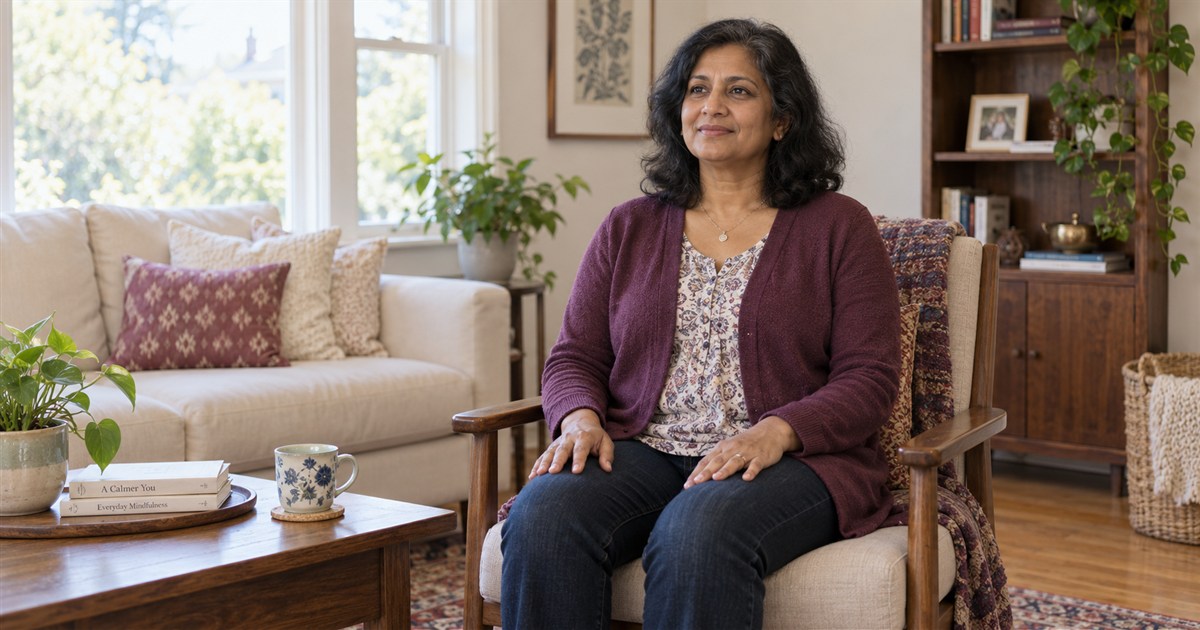
Meditation does not need to become another task you must succeed at. If you choose to try it, begin with a brief, comfortable pause. You do not have to empty your mind, receive a message or feel peaceful on command.
This article offers a simple reflection option, not a treatment program or a route to guaranteed career results. It is fine to use another form of rest or to skip meditation.
Set a modest purpose
Instead of “This will manifest my ideal job,” try “I will pause before deciding which task to do next.” That purpose leaves room for an ordinary experience: some thoughts, a distraction and perhaps a clearer question afterward.
NCCIH’s overview of meditation and mindfulness describes varied practices and potential benefits, but also limitations in the evidence and the possibility of unpleasant effects. Meditation should not replace health care or delay seeking help.
An optional short pause
- Choose a comfortable position. A chair is enough; there is no requirement to sit on the floor or use a special posture.
- Keep the setting ordinary. You do not need candles, incense, music or a paid app. Keep your eyes open if you prefer.
- Pick a simple point of attention. Notice an ordinary sound or the contact of your feet with the floor. If you choose breathing, let it remain natural rather than forcing a pattern.
- Notice a distraction without a verdict. You can gently return attention, change the point of focus or finish the pause.
- End when you choose. Reorient to the room and decide whether you want to continue your day, rest or ask for support.
Keep any first attempt brief enough to feel manageable. There is no required number of minutes or streak. Do not push through distress because a guide says a breakthrough is coming.
Common expectations you can let go
| Expectation | A more workable approach |
|---|---|
| “I must stop thinking.” | Thoughts may continue; you can notice them without making that a failure. |
| “Every session must calm me.” | You can end or choose another activity if the experience is not helpful. |
| “A vivid image is guidance.” | Keep an image separate from facts you have checked. |
| “Longer means better.” | Do not use duration as proof of benefit or spiritual progress. |
| “This will bring career success.” | Practical preparation, conditions and decisions still matter. |
Separate reflection from the next action
After a pause, write one sentence about a practical issue. For example: “I need to ask whether the platform pays for waiting time.” Then choose the appropriate action: read the agreement or request clarification. A peaceful feeling is not a substitute for the answer.
The career reflection and evidence guide can help you turn a broad impression into something checkable. If meditation brings up an intuition question, use observation, alternatives and review rather than assuming a message is accurate.
Stopping is an available choice
A systematic review of adverse experiences in meditation documents that difficult experiences can occur. Do not assume a practice is harmless simply because it is described as spiritual.
If the practice makes you distressed, stop and do something ordinary that helps you reconnect with your surroundings. Seek qualified support for persistent or concerning experiences rather than treating them as proof of awakening. An instructor’s spiritual title is not a clinical qualification.
Ask a prospective instructor about training, approach, boundaries and what happens if a participant wants to stop. Do not buy more sessions because someone insists discomfort proves you need a deeper paid intervention.
Keep the standard humane
You are not required to like meditation. A useful pause fits your circumstances and leaves you free to continue, change or stop. It does not have to produce a mystical experience or a measurable achievement.
Frequently asked questions
1. Is meditation the key to career success?
No. It does not guarantee a job, income, promotion or a successful reading practice.
2. Do I have to stop all thoughts?
No. Thoughts may continue during a pause; that is not a failure.
3. Must I close my eyes?
No. You can keep them open if that is more comfortable.
4. Do I need a special sitting posture?
No. Choose a comfortable position, such as sitting in a chair.
5. How long should a first pause be?
Keep it brief and manageable. This article does not prescribe a required duration.
6. Do I need candles, incense or an app?
No. An ordinary setting is enough.
7. Should I force a breathing pattern?
No. This exercise does not require breath holding or controlled breathing.
8. Can I focus on something other than breathing?
Yes. You might notice an ordinary sound or the contact of your feet with the floor.
9. Does a vivid image prove psychic guidance?
No. Keep imagery separate from independently checked information.
10. What if I do not feel calmer?
Do not make that a personal failure. You can stop or choose another activity.
11. Should I continue if the practice is distressing?
Stop rather than pushing through distress. Seek qualified support for persistent or concerning experiences.
12. Can meditation replace health care?
No. It should not replace care or delay seeking help for a health concern.
13. What should I ask an instructor?
Ask about training, the approach, boundaries and your freedom to stop.
14. Do I need to buy more sessions to make progress?
No. Do not accept pressure to purchase a supposed breakthrough.
15. What is a useful step after the pause?
Identify one practical question and choose an appropriate action to check or address it.
The piece does a good job of breaking down the steps to start meditating, especially the advice on focusing on breathing. It seems like a practical guide for beginners.
The article provides a comprehensive overview of the benefits of meditation. It’s interesting how meditation is linked to both physical relaxation and mental calmness.
The connection between meditation and intuition is fascinating. I hadn’t considered how one’s inner guidance could be enhanced through regular practice.
I appreciate the detailed explanation of how meditation can impact both emotional well-being and productivity. The emphasis on consistency is also very helpful.
It’s intriguing to read about the multifaceted benefits of meditation, from stress relief to increased focus. However, it would be helpful to see more scientific backing on the claims made.
I agree. Some empirical studies or references could strengthen the article’s points.
While personal anecdotes and general advice are useful, evidence-based support would make the information more compelling.