

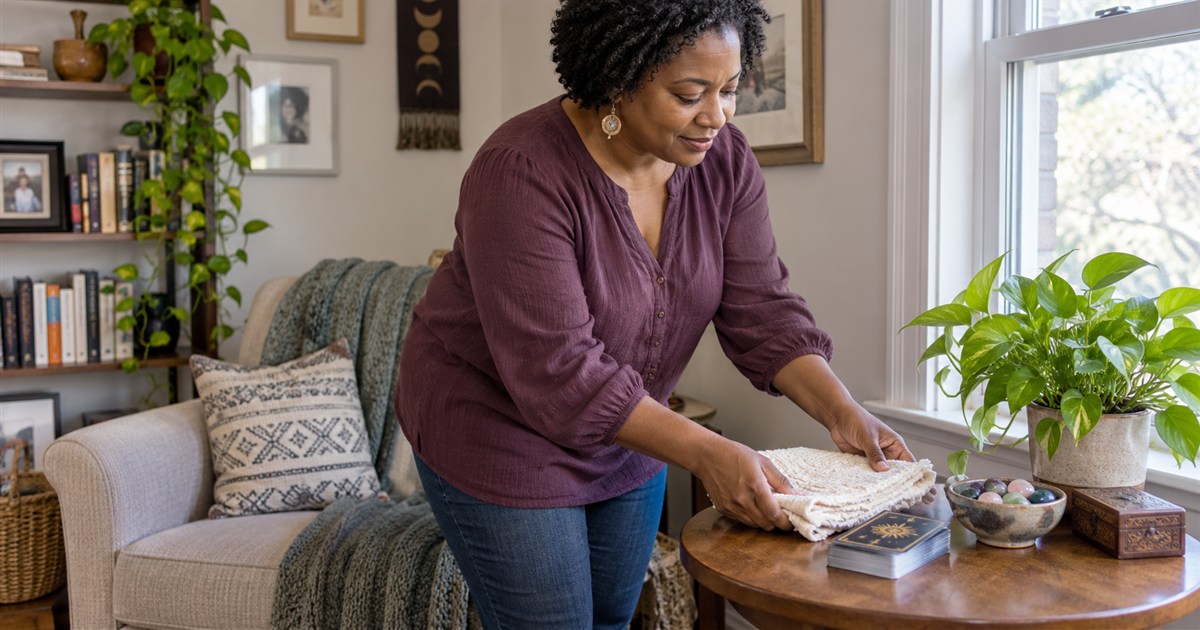
A room can feel unsettled without being haunted. Start with what you can observe and change: noise, lighting, clutter, maintenance and the needs of the people sharing it.
“Energy clearing” is spiritual language for some people and a metaphor for a fresh start for others. Neither use establishes that a home contains earthbound spirits, emotional residue or paranormal pollution.
Check safety before interpretation
A flickering appliance, unusual noise or moving door deserves an ordinary investigation, not an automatic poltergeist diagnosis. Arrange qualified repair for electrical or appliance concerns. Do not handle damaged wiring or ignore warning alarms while performing a ritual.
CDC explains that carbon monoxide is an odorless, colorless gas and can cause symptoms including headache, dizziness and confusion. A feeling that a room is “wrong” cannot identify the cause. Keep appropriate alarms and appliance maintenance in place.
If a carbon monoxide alarm sounds
CPSC advises moving outside to fresh air immediately and calling emergency services. Do not search for the source or reenter until responders say it is safe. A cleansing practice is not a response to a CO emergency.
Make the concern specific
Instead of “the house has bad energy,” write what you notice: “The bedroom is noisy at night,” “this desk is difficult to use” or “we keep arguing about the shared room.” Specific observations suggest different practical next steps.
| What you notice | A practical next step |
|---|---|
| A door moves or makes noise. | Check the latch, hinges and drafts; arrange repair where needed. |
| The room is hard to use. | Clear a path and rearrange one area for its actual purpose. |
| People disagree about the space. | Agree on storage, noise and access rather than blaming someone’s energy. |
| A child or pet avoids an area. | Check what might frighten or discomfort them and seek appropriate support when needed. |
Nightmares, a pet’s behavior and a glimpse at the edge of your vision do not independently establish a haunting. Do not tell a child that a feared corner contains a spirit.
Try a simple reset without buying special equipment
- Choose one area. A chair, bedside surface or small desk is enough.
- Remove what is in the way. Keep useful items accessible and avoid creating new hazards.
- Adjust for the people using it. Ask about noise, light and privacy rather than imposing a ritual.
- Add one optional marker. A fresh cloth, a personal photograph or a written intention can symbolize the change.
- Review the practical result. Is the area easier to use? What still needs attention?
Keep spiritual practices optional and smoke-free
If a symbolic ritual is meaningful, use a quiet spoken intention or a short period of reflection. You do not need burning herbs, oils, loud bowls or salt scattered across a shared floor. Respect others’ preferences and keep small objects away from children and pets.
A crystal may be decoration or a personal reminder. It does not replace maintenance, medical care or a respectful conversation. Read our guide to sharing a spiritual workspace for consent and shared-space boundaries.
Do not purchase a cure for an unverified threat
Be cautious if someone declares your home spiritually contaminated and demands urgent payment to make it safe. Ask what can actually be checked, decline pressure and address the observable concern. For related guidance, see fear-based psychic claims and practical workplace design.
Frequently asked questions
1. Does an uncomfortable room mean it is haunted?
No. Discomfort alone does not establish a haunting. Start with observable conditions and practical needs.
2. What does space clearing mean here?
It means a practical reset, with an optional symbolic practice if meaningful to you. It is not a verified removal of spirits.
3. Are moving doors proof of a poltergeist?
No. Check latches, hinges, drafts and other ordinary causes.
4. Should I ignore an appliance fault during a ritual?
No. Arrange qualified repair and follow safety advice. A ritual does not repair an appliance.
5. Can I smell carbon monoxide?
No. Carbon monoxide is odorless and colorless; appropriate alarms and safe appliance use are important.
6. What should I do if a CO alarm sounds?
Move outside to fresh air immediately and call emergency services. Do not look for the source or reenter until responders say it is safe.
7. Can nightmares diagnose a haunting?
No. A nightmare does not establish that a spirit is in the room.
8. Does a pet avoiding a corner prove a spirit is there?
No. Check ordinary sources of discomfort or fear and seek veterinary help where appropriate.
9. Do I need to burn sage or incense?
No. A smoke-free symbolic reset can use quiet reflection or a spoken intention.
10. Can I perform a ritual in a shared room without asking?
Ask the people who share the space and respect their preferences about sound, smoke, objects and access.
11. Do crystals replace home maintenance?
No. A decorative or symbolic object does not replace repairs or safety equipment.
12. Where should I begin a practical reset?
Choose one small area, remove obstructions and arrange useful items for the way the space is actually used.
13. Should I tell a frightened child that a spirit is present?
Do not present an unverified haunting as fact. Listen to the concern and check practical sources of fear.
14. Must I pay someone to remove negative energy?
No. An unverifiable declaration of spiritual contamination is not a reason to accept urgent payment pressure.
15. How can I judge whether the reset helped?
Check practical changes such as easier access, less clutter or clearer shared-space agreements, rather than claiming proof that a spirit left.
The proposed methods to clear negative energies are intriguing but seem to lack empirical validation. It would be beneficial to see some scientific evidence or case studies supporting their efficacy.
I agree with Julia. While anecdotal evidence can be compelling, having more rigorous studies would lend greater credibility to these practices.
The historical context and examples provided for each type of negative energy are informative but could be expanded to include more diverse cultural perspectives on energy clearing.
The article provides a detailed outline of various types of negative energies and their potential effects. However, it would be helpful to include more practical steps or tools for individuals to use in their own homes.
Including a list of resources or professionals who specialize in energy clearing could also be beneficial for readers seeking further assistance.
Yes, I second that. Practical applications are crucial for turning this information into actionable strategies.
While the article touches on various methods to clear energies, it lacks a unified framework or approach. It feels somewhat fragmented.
The distinction between different types of negative energies and their sources is well-explained. It clears up some misconceptions I had regarding hauntings and emotional residues.