

Remembering someone who died does not require a sign, a psychic-development routine or a paid reading. Your relationship is not made less meaningful by the absence of an unusual experience.
You may have spiritual beliefs about an afterlife. Keep those beliefs separate from a promise that a voice, dream, number or butterfly establishes communication with a particular person.
Do not make contact a task you must complete
No practice can guarantee that speaking to someone each morning will open a conversation from beyond death. You do not need to repeat a ritual until you obtain a response.
It is also inappropriate to claim that the deceased require proof that you are coping or that silence means they are unhappy. Those interpretations should not become demands placed on a grieving person.
Personal meaning and verified messages are different
| Experience | What you can say | What it does not establish |
|---|---|---|
| A familiar song | It brought a memory to mind. | That someone caused it to play. |
| A dream | I dreamed about the person. | That the dream was a verified message. |
| A butterfly or number | It felt meaningful to me. | That contact or protection is guaranteed. |
You do not have to remove personal meaning to keep the conclusion careful. Nor should someone else insist that their interpretation is what your loved one wants.
Make room for different experiences
Cruse Bereavement Support describes seeing, hearing or sensing the presence of a person who died as experiences that can occur in grief. They may feel comforting or unsettling. That description does not verify supernatural communication.
If an experience is distressing, persistent or disrupting ordinary life, seek appropriate qualified support rather than assuming you must develop a gift. A reader should not tell you to stop existing care or interpret every voice as a spirit.
Choose remembrance without a performance
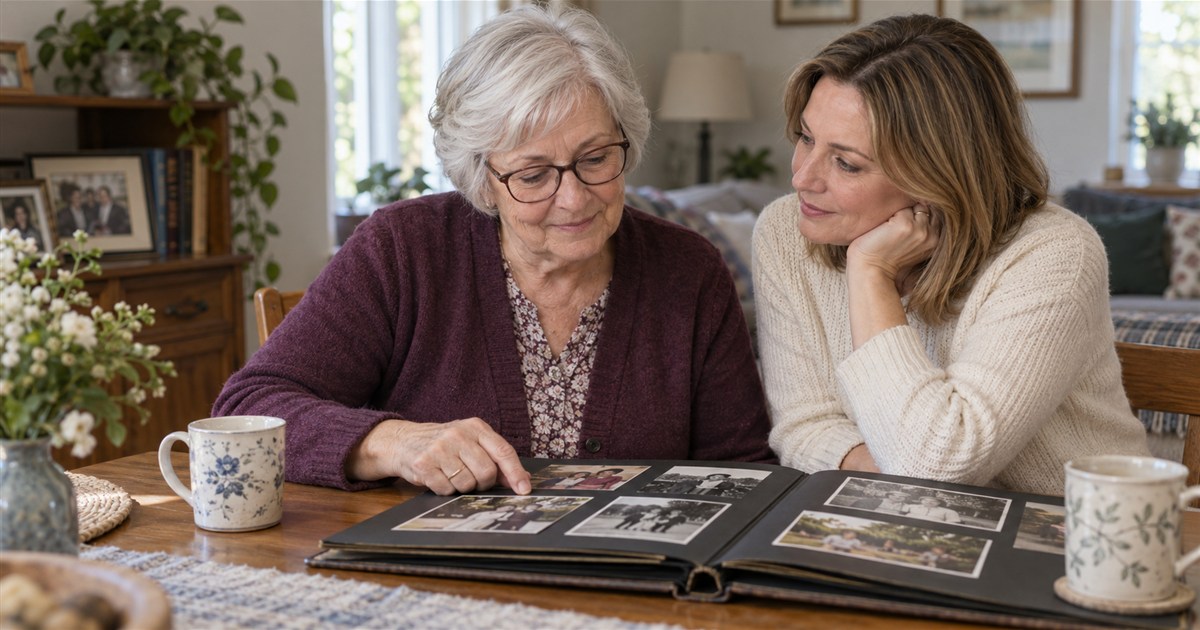
If you want, write about a memory, look at a photograph or share a story with someone who wants to listen. These are optional ways to remember, not techniques that promise contact or prescribe how you should grieve.
Keep private memories private unless you choose otherwise. You do not owe a group your story, a public testimonial or an explanation of your beliefs.
If considering a mediumship session
Clarify the format, full cost, privacy and freedom to stop. Do not accept a guaranteed reunion, a promised cure for grief or pressure to purchase repeated sessions until a message appears.
Read the mediumship terminology guide and the service-selection questions. A sympathetic interaction or personally meaningful statement does not by itself verify its source.
Keep your choices yours
A claimed message should not control your spending, relationships, health care or work decisions. Use the reading-review checklist to distinguish a reader’s statements from independent facts.
If someone uses a supposed message to threaten you or demand payment, pause and seek an independent perspective. The spiritual-pressure guide addresses those limits.
You can remember someone with affection, uncertainty or complicated feelings without proving that contact occurred.
Frequently asked questions
1. Must I receive a sign to preserve a bond?
No. Remembering someone does not require an unusual experience or proof of contact.
2. Can a daily ritual guarantee a response?
No. Do not treat repetition as a way to guarantee communication with the dead.
3. Does silence mean the deceased is unhappy?
Do not turn the absence of a sign into that conclusion.
4. Can a song still feel meaningful?
Yes. Personal meaning does not require treating the song as verified communication.
5. Does a dream establish a message?
No. Keep the dream and your interpretation separate from a verified claim.
6. Do butterflies or numbers guarantee contact?
No. A personally meaningful coincidence does not establish contact or protection.
7. Can sensed presence occur during grief?
Cruse describes such experiences as occurring in grief; that does not verify a supernatural source.
8. Must an unsettling experience be a psychic gift?
No. If it is distressing or disrupting life, seek appropriate qualified support rather than assuming a gift.
9. Should a reader tell me to stop care?
No. A reading should not replace or undermine appropriate professional care.
10. What are optional ways to remember?
You might write a memory, look at a photograph or share a story with someone who wants to listen.
11. Must I share private memories with a group?
No. You choose whether and how to share your story.
12. Can a medium promise a guaranteed reunion?
Do not treat that promise as something a session can guarantee.
13. What terms should I check?
Clarify format, full cost, privacy and your freedom to stop.
14. Does a meaningful statement verify its source?
No. A personal reaction does not by itself establish where a statement came from.
15. What if a supposed message demands payment?
Pause and seek an independent perspective rather than treating the demand as an obligation.
The article provides an intriguing perspective on developing psychic abilities to communicate with the deceased. It’s an interesting approach for those who believe in such practices.
Trusting one’s intuition and being open to signs from the spirit world is a central theme in the article. It emphasizes the importance of faith in one’s own experiences and perceptions.
The idea of using intuition and inner feelings to connect with the spirit world is quite compelling. The suggestion to keep a journal of dreams is practical advice.
Yes, documenting dreams can be a helpful tool to understand and reflect on one’s subconscious and intuitive experiences.
It’s fascinating how the article discusses signs and synchronicities as ways to communicate with loved ones who have passed away. It’s a unique approach to coping with loss.
The mention of receiving signs from loved ones through things like butterflies or repeating numbers is an interesting concept. It raises questions about the nature of coincidences and spiritual communication.